
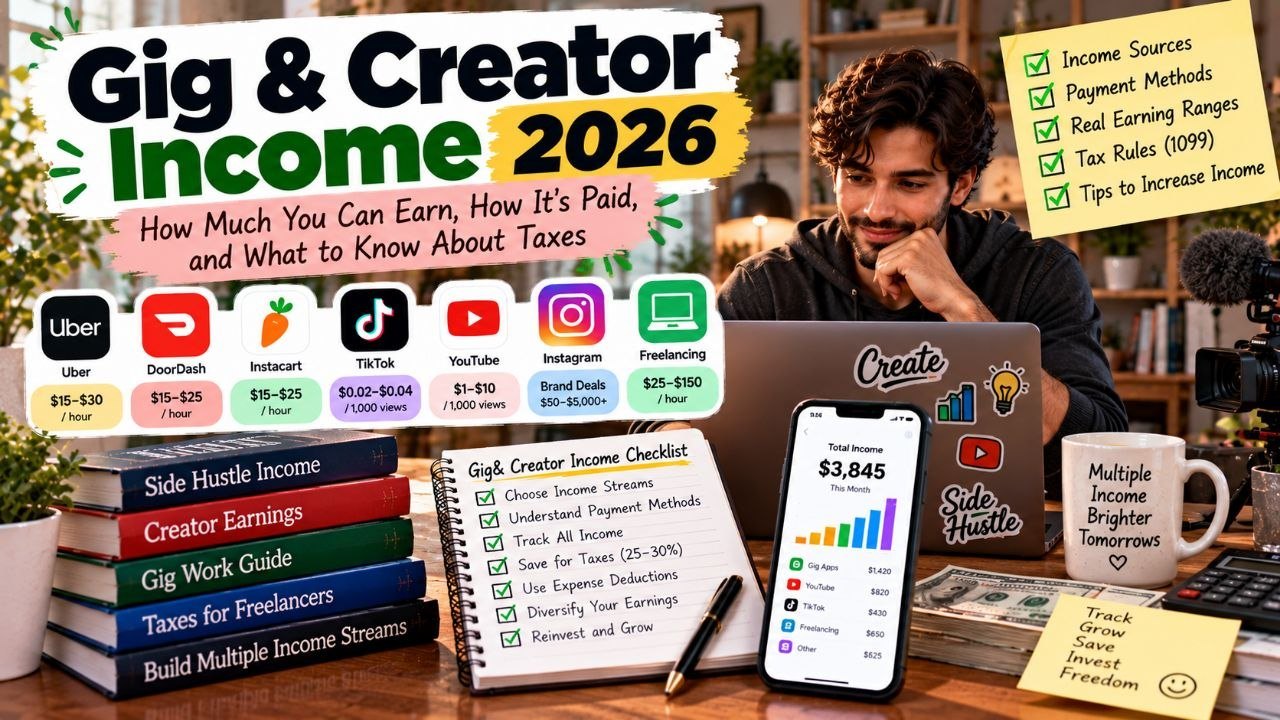
Gig & Creator Income 2026: What Each Platform Really Pays
Every gig and creator platform pays you in a different way, and the advertised number is almost never the number you keep. A DoorDash shift quotes dollars per delivery, Upwork quotes an hourly rate, Etsy quotes a listing price and YouTube quotes a per-view figure — yet all four are decided by the same three variables: what the platform takes, what the work costs you to deliver, and how long it actually takes.
Gig pay guide index (2026)
- DoorDash pay
- Fiverr seller pay
- Grubhub pay
- Uber Eats pay
- Lyft pay
- TaskRabbit pay
- Walmart Spark pay
- Seasonal jobs that pay weekly
- Weekend cash jobs
- Instacart batch pay
- Same-day pay gig apps
- Highest paying freelance skills
Free money & tax calculators · How to make money online · Freelancing & gig work category
This hub collects our 2026 breakdowns of platform pay into one place, so you can compare a driving app against a marketplace against a creator payout on equal terms.
The only number worth comparing: effective hourly rate
Gross earnings divide the work unfairly. The comparable figure is your effective hourly rate:
(Gross earnings − platform fees − out-of-pocket costs) ÷ hours worked, including unpaid time
- Platform fees include final value fees on marketplaces, service fees on freelance platforms and shipping supplies on physical products.
- Out-of-pocket costs include fuel, mileage, packaging, software and subscriptions.
- Unpaid time includes waiting for orders, editing a video, answering buyer messages and sourcing inventory.
Two people can earn the same $500 this month and one of them made $25 an hour while the other made $9. Fees and unpaid time are the reason.
Gig and delivery apps
Delivery and rideshare pay is the most transparent because the app settles after every order. The catch is that base pay varies by market, tips are unpredictable, and your mileage is a real expense. Start with our comparison of apps that pay the same day if cash speed matters, and our DoorDash hourly breakdown for the per-order math including mileage and fuel. Rideshare specifically: how much Uber pays drivers in 2026 ranges from $18–$30 per online hour gross depending on market.
Marketplaces: selling things you own or source
Marketplaces pay once an item sells, and the fee structure decides whether a flip is worth doing. Our eBay vs Facebook Marketplace comparison runs the same item through both platforms, and the Etsy take-home breakdown shows what a handmade seller keeps after listing, transaction and offsite ad fees.
Rule of thumb: if net profit per order is under $5, volume will not fix the problem. Either raise the price or cut the cost of goods.
Freelance and service platforms
Service work has the highest ceiling and the longest ramp. Freelance platforms take a percentage of each order, so your first jobs are effectively a marketing cost that buys reviews. See Upwork for beginners for Connects and fee mechanics, and how much Fiverr pays by seller level for the commission structure and realistic first-90-day earnings.
Creator payouts: views are not income
Creator monetisation is the most misunderstood, because a per-view rate is a rate on attention, not on your content. Two channels with the same views can earn very differently depending on niche, geography and watch time. Our YouTube CPM vs RPM guide explains the difference between what advertisers pay and what you receive, and TikTok payout tiers covers the creator fund reality.
What every platform has in common
- You are a business, not an employee. Nothing is withheld for taxes, and on net profit above $400 you generally owe self-employment tax, which our self-employment tax walkthrough breaks down.
- Expenses are your margin. Mileage, home office, packaging and equipment are deductible when they are ordinary and necessary for the work. Start with the side hustle write-offs list.
- Platforms report income. Under current IRS rules a marketplace or payment app must issue a Form 1099-K once you receive more than $20,000 across more than 200 transactions in a year, and you can receive one below that level too.
- Concentration is risk. One account deactivation can end 100% of your income. Run two channels before you need the second one.
- Speed beats optimisation early on. Your first $1,000 matters more for learning than for earning; use it to buy better tools or inventory.
Where to start in 2026
If you need money this week, start with same-day gig work or local marketplace sales, because both settle fast and need no portfolio. If you want income that compounds, pick one freelance skill or one content niche and give it 90 days without switching. Compare the broader options in our best side hustles ranking and the make money online guide.
FAQ
Which gig platform pays the most in 2026?
There is no single winner. Effective hourly rate depends on your market, the hours you work and your vehicle costs, which is why we compare platforms on take-home rather than advertised pay.
Do I need an LLC to earn gig income?
No. Most people start as sole proprietors and simply report the income on their tax return. An LLC becomes worth considering once you have liability exposure, partners or a separate business bank account.
How much tax should I set aside?
A common planning figure is 25–30% of net profit once self-employment tax and income tax are combined, but your bracket decides the real number.
Can I combine several platforms at once?
Yes, and most people should. The risk is spreading your hours so thin that no single channel reaches the level where it pays well.
Sources
This article is educational information, not personalized tax or financial advice. Platform fees and IRS thresholds change; confirm current figures before making decisions.
Read next: if you want a low-effort layer on top of gig work, our survey sites vs cashback apps payout reality check runs the honest hourly math on both and shows where points quietly expire.
Want to aim higher than platform base rates? See which freelance skills pay the most per hour in 2026.
Reselling apps are gig income too. Before you price a listing, see how Poshmark and Mercari fees compare in 2026.
To see how those platform payouts compare per 1,000 views, our YouTube pay per 1,000 views breakdown breaks down real RPM numbers by niche.
how much YouTube pays in 2026 — see real CPM and RPM numbers by niche to compare creator earnings across platforms.